Showing posts with label Traveling. Show all posts
Showing posts with label Traveling. Show all posts
Saturday, March 26, 2011
Music makes the people come together
Having been quite busy lately, I haven't got much time to get back on the blog. To fill up the gap, I'm publishing this quickly-made video just to show you what's been on my mind - I agree, I need a break! In my spare time I've been practising on my new guitar, it feels so good to "be back". So my thoughts went back to highschool times - hence the need to present you this Spanish classical guitar song, sung by me and my ex guitar professor. Enjoy! PS: the audio is pretty bad cause it's registered with an old mp3 player, and I have to admit that the video is not that good either...


Monday, January 17, 2011
Layers of history
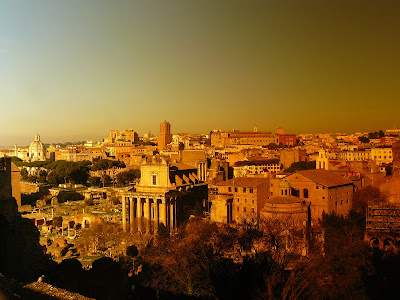
Don't put too much weight on my previous thoughts about work (although I do mean to say what I've just said)..."Roma è Roma", and living here can be as if you lived in a small bottle which contains the essence of the entire South-European history...My heart feels overwhelmed everytime I walk on the streets which are (almost literally) full of history. There is Viale del Muro Torto, where they say they used to bury the prostitutes who didn't deserve to be buried under the sacred land of the Catholic Church. There are buildings who have undergone so many alterations, that you can actually see a layer coming after another one, belonging to a different age...And there you are, a new person in the middle of an old city; a transitory presence in an everlasting world.




Saturday, December 18, 2010


Monday, November 22, 2010
New life, new me?
We keep talking about intercultural competences acquired through workshops and seminars, but in the end it's either yo have it, or you don't. Who taught the poor immigrant women who are looking after an old person in a foreign country what a cultural shock is and how can you manage it? Which are the levels of intercultural sensitivity and how can you become more tolerant toward others?
I remember having met on an Italian train two Romanian women who had come to Italy a few years before. Once they discovered I was Romanian, they started to reveal me their secrets. "I love preparing pesto for the woman I'm working for, but when she turns her back I always add more basil and olive oil. She has no idea about this, but she goes crazy about it!" I could see in her eyes that she simply loved it.
Of course, many things lay behind this happy image. Living abroad means having to deal with the lack of your family and friends; beside openness, it even involves the possibility that your openness might change you into a somehow different person. At the beginning, it all looks so fascinating and you feel that you've always wanted your life to be like that. Finally, you have reached your goal: new friends, new job, new food... Then, something belonging to your inner culture, that you most probably hated before, starts to yell for new attention. And you find yourself missing the things that you couldn't even bear when you were at home. Surpassing this moment cannot be taught. That's why when someone asks me how come I don't miss home, I don't know what to answer. I do miss home, a lot, but I'm just too curious to give up at all the lovely possibilities that await me.
Saturday, November 6, 2010
Contrast

Brancas casas caiadas
Que ao sol brando de Outono
Se erguem, testemunhas do tempo,
De um passado sem retorno.
Suas fachadas imóveis
De centenárias vivências,
Seu ar inextirpável,
Sua misteriosa indeiscência,
Que segredos encerra
Desta minha bela terra.
(Ines Ribeiro)
Wednesday, October 27, 2010


Thursday, October 21, 2010
Professione: Cittadina Europea :)
Com’è iniziato il percorso che, di anno in anno, ti ha portata a girare l’Europa e vivere periodi più o meno lunghi in diverse città del continente?
Tutto è iniziato come una fiaba dello studente moderno: con l’Erasmus. Sin dall’inizio dell’università, a Bucarest, volevo ad ogni costo ottenere questa mobilità di studio presso l’Università degli Studi di Perugia, essendo da sempre innamorata della lingua italiana. Passati questi sei mesi, mi sono accorta che il mio percorso all’estero era appena cominciato e che non potevo fermarmi lì.
Tutto è iniziato come una fiaba dello studente moderno: con l’Erasmus. Sin dall’inizio dell’università, a Bucarest, volevo ad ogni costo ottenere questa mobilità di studio presso l’Università degli Studi di Perugia, essendo da sempre innamorata della lingua italiana. Passati questi sei mesi, mi sono accorta che il mio percorso all’estero era appena cominciato e che non potevo fermarmi lì.
Cosa vuol dire per te Europa?
La mia casa, il posto di cui non mi annoio mai, a cui mi sento profondamente legata e che non smette mai di suscitare il mio interesse.
La mia casa, il posto di cui non mi annoio mai, a cui mi sento profondamente legata e che non smette mai di suscitare il mio interesse.
Viaggiare è un pò riscoprire se stessi?
Direi proprio scoprire se stessi, perché viaggiando riesci ad arricchire la tua identità personale e a conoscere degli aspetti della tua personalità che magari prima rimanevano nascosti. Per dare un esempio, i viaggi mi hanno fatto scoprire la mia passione per le lingue straniere e per gli incontri tra persone di culture diverse. In più, un’esperienza all’estero mette alla prova la tua resistenza agli choc interculturali e le tue reazioni davanti alla diversità di tutti i tipi: culturale, geografica, linguistica, religiosa, etnica, politica, ecc. Insomma, scopri un nuovo tipo di nuovo.
Direi proprio scoprire se stessi, perché viaggiando riesci ad arricchire la tua identità personale e a conoscere degli aspetti della tua personalità che magari prima rimanevano nascosti. Per dare un esempio, i viaggi mi hanno fatto scoprire la mia passione per le lingue straniere e per gli incontri tra persone di culture diverse. In più, un’esperienza all’estero mette alla prova la tua resistenza agli choc interculturali e le tue reazioni davanti alla diversità di tutti i tipi: culturale, geografica, linguistica, religiosa, etnica, politica, ecc. Insomma, scopri un nuovo tipo di nuovo.
Cosa hai ricavato da queste esperienze? Se dovessi dare un aggettivo per ogni luogo in cui hai vissuto?
Ogni periodo vissuto in qualche paese straniero ha stimolato la mia curiosità e ha sviluppato la mia capacità di adattamento, al punto che ora mi sentirei capace di viaggiare in qualsiasi posto del mondo, e forse anche vivere. Innanzitutto, la mia scala personale di valori è cambiata, ora guardo con tanta relatività quello che, secondo la mia cultura, sarebbe buono o cattivo. Apprezzo e rispetto la diversità, a tal punto che potrei ascoltare a bocca aperta i riti indiani per il matrimonio o i racconti del mio amico giapponese che legge la mano. Io non devo credere nelle cose che sento, però esse mi danno l’immagine vera del mondo in cui viviamo – un mondo straordinariamente ricco dal punto di vista culturale, e tutto ciò mi affascina e mi rende più partecipe alle trasformazioni delle nostre società.
Ogni periodo vissuto in qualche paese straniero ha stimolato la mia curiosità e ha sviluppato la mia capacità di adattamento, al punto che ora mi sentirei capace di viaggiare in qualsiasi posto del mondo, e forse anche vivere. Innanzitutto, la mia scala personale di valori è cambiata, ora guardo con tanta relatività quello che, secondo la mia cultura, sarebbe buono o cattivo. Apprezzo e rispetto la diversità, a tal punto che potrei ascoltare a bocca aperta i riti indiani per il matrimonio o i racconti del mio amico giapponese che legge la mano. Io non devo credere nelle cose che sento, però esse mi danno l’immagine vera del mondo in cui viviamo – un mondo straordinariamente ricco dal punto di vista culturale, e tutto ciò mi affascina e mi rende più partecipe alle trasformazioni delle nostre società.
Scegliere solo un aggettivo per ogni luogo in cui ho vissuto non è facile, però ci provo: Bucarest (Romania): artistica, Perugia: giovane, Amburgo (Germania): multiculturale, Siena: ferma, Strasburgo (Francia): multistrato,Coimbra (Portogallo): eterogenea.
Parliamo di attualità. Cosa pensi del provvedimento varato in Francia che prevede l’allontamento dal territorio nazionale delle persone di cittadinanza rumena?
C’è da dire che la Francia ha rimpatriato i Rom di cittadinanza rumena che risiedevano illegalmente sul territorio francese. Personalmente, capisco che non sia facile vivere con accanto un campo Rom che può creare tanti tipi di problemi e penso che sia giusto allontanare le persone che non rispettano le leggi, qualunque sia la loro cittadinanza. Europa è un continente molto tradizionale che, momentaneamente, non riesce ad assorbire i popoli che hanno uno stile di vita fondamentalmente diverso; essendo visti da sempre come un problema, i Rom hanno finito per costituire realmente un problema per le società europee e la loro discriminazione persiste dappertutto. Il provvedimento della Francia incide sicuramente in modo negativo sull’immagine del mio paese, però non lo considero come una misura contro i miei connazionali, ma piuttosto contro i residenti illegali sul territorio francese.
C’è da dire che la Francia ha rimpatriato i Rom di cittadinanza rumena che risiedevano illegalmente sul territorio francese. Personalmente, capisco che non sia facile vivere con accanto un campo Rom che può creare tanti tipi di problemi e penso che sia giusto allontanare le persone che non rispettano le leggi, qualunque sia la loro cittadinanza. Europa è un continente molto tradizionale che, momentaneamente, non riesce ad assorbire i popoli che hanno uno stile di vita fondamentalmente diverso; essendo visti da sempre come un problema, i Rom hanno finito per costituire realmente un problema per le società europee e la loro discriminazione persiste dappertutto. Il provvedimento della Francia incide sicuramente in modo negativo sull’immagine del mio paese, però non lo considero come una misura contro i miei connazionali, ma piuttosto contro i residenti illegali sul territorio francese.
Come spieghi tutta questa intolleranza verso i tuoi connazionali? Credi che la gente non sappia la differenza tra Rom e rumeno?
I rumeni sono uno dei popoli più poveri dell’Unione Europea (la zona più povera dell’Unione si trova nell’est della Romania), che risiede in una posizione geopoliticamente strategica. Siamo sempre stati divisi dagli interessi delle potenze più importanti, abbiamo sofferto i traumi del comunismo e, in più, abbiamo una mentalità balcanica che non accetta necessariamente le stesse tappe di sviluppo che hanno seguito i paesi occidentali. Di conseguenza ora, con le nuove possibilità di viaggiare, vogliamo vivere bene come gli occidentali e immigriamo in massa (d’altronde, come gli altri popoli dell’est). Se a tutta questa storia aggiungiamo la confusione che si è creata intorno ai due nominativi, penso di aver già spiegato l’intolleranza esistente verso i miei connazionali. Se questa confusione tra “Rom” e “rumeno” è creata appositamente o è semplicemente malgestita dal governo rumeno, questo non lo so. Comunque, si tratta di un errore grave a cui contribuiscono sia i mass media che l’ignoranza della gente e non vedo perché i rumeni dovrebbero rimanere afflitti.
I rumeni sono uno dei popoli più poveri dell’Unione Europea (la zona più povera dell’Unione si trova nell’est della Romania), che risiede in una posizione geopoliticamente strategica. Siamo sempre stati divisi dagli interessi delle potenze più importanti, abbiamo sofferto i traumi del comunismo e, in più, abbiamo una mentalità balcanica che non accetta necessariamente le stesse tappe di sviluppo che hanno seguito i paesi occidentali. Di conseguenza ora, con le nuove possibilità di viaggiare, vogliamo vivere bene come gli occidentali e immigriamo in massa (d’altronde, come gli altri popoli dell’est). Se a tutta questa storia aggiungiamo la confusione che si è creata intorno ai due nominativi, penso di aver già spiegato l’intolleranza esistente verso i miei connazionali. Se questa confusione tra “Rom” e “rumeno” è creata appositamente o è semplicemente malgestita dal governo rumeno, questo non lo so. Comunque, si tratta di un errore grave a cui contribuiscono sia i mass media che l’ignoranza della gente e non vedo perché i rumeni dovrebbero rimanere afflitti.
Progetti futuri? Dove ti vedi tra vent’anni?
Nuove esperienze di studi, nuove esperienze di lavoro, sempre all’estero. Il mio percorso personale è molto flessibile e quindi è difficile dire che cosa farò tra vent’anni, però di sicuro vivrò all’estero, forse in Italia. Avrò dei figli che parleranno un sacco di lingue straniere, avrò visitato tanti posti lontani e magari avrò scritto qualche libro sulle mie esperienze da girovaga.
Nuove esperienze di studi, nuove esperienze di lavoro, sempre all’estero. Il mio percorso personale è molto flessibile e quindi è difficile dire che cosa farò tra vent’anni, però di sicuro vivrò all’estero, forse in Italia. Avrò dei figli che parleranno un sacco di lingue straniere, avrò visitato tanti posti lontani e magari avrò scritto qualche libro sulle mie esperienze da girovaga.
Wednesday, October 20, 2010
Under construction...
Non so che voglio dalla vita. C’è un sacco di confusione intorno a me però, comunque, tutti gli altri mi sembrano ben più decisi rispetto a me. Hanno una meta stabile oppure trascinano le loro ambizioni su una strada ruvida e infinita, però loro non si fermano. Io. Gli altri mi chiedono come ce la faccio a viaggiare così tanto e ad essere sempre in movimento, senza sapere che anch’io mi chiedo la stessa cosa. Risposta? Neanch’io non so come ce la faccio e o anche dei forti dubbi se ce la faccio veramente. Farcela significa non solo farla, ma implica anche un buon fine. Essendo sempre in movimento, anche le mie mete sono completamente mobili e quindi la strada per raggiungerle prende la forma delle rotte aeree europee; a cui si aggiungono i soliti ritardi (come nel caso dei voli aerei) e le solite perdite dei bagagli emozionali.
 Avere l’identità personale in continua costruzione implica il rischio di a volte sentirsi senza nessun’identità, un miscuglio di pensieri e ambizioni senza uno scopo preciso, né una forma distinta. Lo choc culturale si esperimenta anche all’interno della propria casa dove ci sei cresciuto: perché non ti ritrovi più nei soliti posti, perché i tuoi vecchi amici ti sembrano lontani e mantieni appositamente questa fredda distanza tra te e le cose che una volta ti piacevano? Sarà una mia volontà camuffata o forse il bisogno di proteggere il nuovo progetto di me stessa che si sta costruendo: devo definire quello che fa parte della mia identità? Che cosa determina se un oggetto o un amico non si trova più sulla tua mappa personale?
 Avere l’identità personale in continua costruzione implica il rischio di a volte sentirsi senza nessun’identità, un miscuglio di pensieri e ambizioni senza uno scopo preciso, né una forma distinta. Lo choc culturale si esperimenta anche all’interno della propria casa dove ci sei cresciuto: perché non ti ritrovi più nei soliti posti, perché i tuoi vecchi amici ti sembrano lontani e mantieni appositamente questa fredda distanza tra te e le cose che una volta ti piacevano? Sarà una mia volontà camuffata o forse il bisogno di proteggere il nuovo progetto di me stessa che si sta costruendo: devo definire quello che fa parte della mia identità? Che cosa determina se un oggetto o un amico non si trova più sulla tua mappa personale?
Wednesday, September 15, 2010
Sunday, June 20, 2010
Photography - an easy art?

However, I was continously disturbed by the flashes coming from all directions. Paying a closer attention, I saw that almost everyone was taking so many photos of the event, without even listening the music. I actually saw a group of three people who arrived in that place, surprisingly faced the music group and then this man gave his bag to the woman in the group and started taking photos desperately.
It just seems all so weird. Photography has become more than a tangible proof or a sweet memory, it is something we all like to do. Everyone is trying his best shots and thinks that his angle is the best, only because it captures something that the others will never understand. Well, it is most certainly true, since everyone has a unique view over the world, but do we actually have to name this art? There is a huge difference between artistic photography and a quick shot of an event, but the line is not so definite since there are so many people with a common artistic passion: photography. When have we all become artists only by pushing a button?
I have to admit that I have also taken some photos of that folkloristic event, mostly to have a memory of that night, but also with artistic claims. After having taken a photography course at the university, quite a lot of people have appreciated my shots so I now keep it like a hidden passion. I realise though that I generally keep to myself a passion which is commonly popular among others, falsely thinking that my way of living this passion is unique only because it is not shared or spread like others' hobbies. I remember going crazy for Guns'n'Roses' song Don't cry in the tenth grade, but I've secretely kept this fact only because there was this girl who was desperately yelling for it everytime we heard it at a party. My selfish thought pushed me to believe that I liked the song in a much more profound way than she did.
Nonetheless, I still hope that it won't happen the same way with photography. While it is one of the most accesible forms of art - quick results, easy and available for almost everyone - we have to make a difference between a simple shot, an incomprehensible picture (that oh, we fools, do not understand) and a photography which acutally has a meaning.
Monday, May 17, 2010
About the language issue

The doctors knocked some sense into me so I started to communicate again in Portuguese, but when the doctors from the emergency room started to quickly ask me a lot of details, I switched to English. And that made the entire process easy and smooth. Afterwards, I surprisingly found out that the assistant who was doing my blood analysis had immigrated to Portugal 3 years ago: she came from Romania. So I talked in Romanian with her and it felt nice.
I payed the bus driver in Portuguese. I talked to my parents in Romanian. I contacted my boyfriend and I told him what had happened in Italian. I started writing my graduation paper in French, after having read some articles in Spanish. And now I'm writing in English.
Today, no one is being stopped to think globally. People ask me in which language do I think. I answer them that I rarely think in Romanian, because it always depends on the situation. No one forces you to stay fixed in your inherited values, customs or ways of thinking for all your life. Of course, that doesn't mean that you have to renegate your original culture just because you want to change. What I do think is great nowadays is that we are given enough knowledge in order to better adapt to new environments, to prepare ourselves for this intercultural world.
Thursday, May 6, 2010
Turisti in Portogallo
Mi siedo e chiedo un bicchiere di vino Porto. Il cameriere mi sorride e mi parla piano, con quella complicità con la quale apprezza tutti gli stranieri che si sforzano per parlare la sua lingua. Mi sono detta, anche se sono sola e circondata solo da turisti con i tratti tipici del nord, mi posso godere questa serata promettente. Sì, alla fine accanto a me s'era seduto un tizio in giacca e cravatta, pompato di soldi ma pure lui solo. Ho pensato tra me e me che, se devo andare da sola in un bar per ascoltare musica tradizionale portoghese dal vivo, che sia così.
Non passano neanche cinque minuti di pensieri solitari che il mio vicino di tavolo mi rivolge alcune parole in inglese. Non il business man di provenienza sconosciuta, ma un uomo sessantenne, con la stessa faccia nordica accennata prima. Come i pensieri negativi continuavano a invadermi nella mia solitudine, mi ero schifata all'idea che lui fosse interessato a parlare con me per praticare quella specie di turismo sessuale. Critichiamo la gente del nord perché spende soldi in questi piccoli piaceri sporchi ma siamo noi, la gente del sud, che li invita per fare ciò. Comunque, lui si accorse subito dei miei dubbi e, nel rispondermi, si rivolse verso la sua moglie - di nuovo, il tipico viso nordico che ti spiega anche perché nel mondo esiste il turismo sessuale. Chiarite le intenzioni, comincia a chiedermi da dove vengo, che faccio a Coimbra, come mi chiamo e che studio.
-Chimica!
-No!!!
-Diritto internazionale!
-Devono essere i miei occhiali che le fanno credere una cosa simile!
Praticamente, nelle sue due scelte ha nominato probabilmente le uniche materie al mondo che non suscitano neanche il minimo interesse in me. Mi sono chiesta seriamente cos'è che trasmette la mia presenza agli altri. Essendo troppo occupati per essere noi stessi, ci scordiamo che troppo spesso l'immagine che creiamo negli altri ci rimane parzialmente incontrollabile. A quello che noi vogliamo trasmettere l'altro aggiunge sempre le sue proprie fantasie, senza tenere conto che le sta sovrapponendo a una base reale e, a volte, a lui sconosciuta.
Creata quest'amicizia temporanea, mi rilasso per godere la musica, convincendomi sempre di più della buona scelta che avevo fatto. Le voci erano stupende e l'atmosfera gioiosa, come quando si sta all'estero e tutto ci piace semplicemente perché diverso.
- La musica tradizionale portoghese...ti piace?
-Sì, tantissimo!
Anche il mio gusto è motivato dallo stesso principio. Se fossi stata portoghese, probabilmente non mi sarebbe piaciuta.
-E' come la musica romena, no?
Non so come spiegargli che è completamente diversa, quindi esito e lui mi guarda confuso. Non ho neanche la più pallida idea di come sia la musica tradizionale olandese, ma sicuramente per lui è completamente differente. Certe volte il turismo non fa altro che rafforzare gli stereotipi che avevamo già.
E proprio quando meno me l'aspettavo, il tizio in giacca e cravatta chiama il cameriere e gli chiede di pagare. Nel frattempo si rivolge a me e mi dice in inglese:
-Can I pay yours?
-No! La mia risposta fu chiara e sicuramente inaspettata per lui. Probabilmente sono poche le giovani che non si approfittano di una proposta del genere, ma per me l'offesa che io potessi essere conquistata così, ha superato l'orgoglio di essere notata.
Ci dev'essere qualcosa nell'aria di Coimbra.
Sunday, May 2, 2010
De ma langue, on voit la mer (Virgílio Ferreira)
Etant entouré par un seul voisin presque dominateur et par l’océan de toutes les autre côtés, le Portugal s’est détaché du reste de l’Europe pour voguer sur l’Atlantique. L’appel de l’outre-mer a fait qu’aujourd’hui le monde lusophone s’étend sur quatre continents et huit pays, où plus de 200 millions des personnes parlent le portugais.
Avant hier je me suis sentie pour la première fois partie de cette grande famille lusophone, quand je participais à une conférence sur les rapports entre le Portugal et l’Amérique Latine. En commençant, j’avais immédiatement compris comme j’étais chanceuse de parler une langue de provenance latine, parce que je pouvais comprendre l’espagnol et le portugais sans grands efforts. Mais dans ce moment-là j’ai senti directement que j’étais dans une autre partie du monde, une partie d’où l’Amérique du Sud n’est plus assez loin et où les échanges culturels ou économiques avec le monde latin font part du quotidien. Oui, je suis dans le monde latin et je l’aime beaucoup.
En bref, quand on doit parler du Portugal, on pense aux Grandes Découvertes (Bartolomeu Dias, Vasco da Gama, même le génois Christophe Colomb était marié avec une Portugaise qui sûrement avais senti l’indescriptible saudade pour son mari), au vin du Porto et aux friandises culinaires à base de poisson. Mais le Portugal promet bien plus, seulement si on pense comme un pays assez petit a construit un empire assez grand de l’autre côté du monde ! Et dans ces 3 mois que je vive ici, je me propose de découvrir les particularités de cette partie du monde, et je dois admettre que jusqu’à maintenant, ça marche bien : à peine arrivée, j’ai découvert quelques détailles très intéressants sur la pratique du fado.
Un nostalgique chant marin avec des origines incertaines (peut-être mauresque ou afro-brésilienne), il se développe en Portugal au début du 19e siècle, dans une période agitée du point de vue historique. Utilisé même comme support aux luttes idéologiques, le fado, déjà devenu genre littéraire à la fin du siècle, acquiert sa popularité à Lisbonne, avec les chanteuses Maria Severa et, plus récemment, Amália Rodrigues. Il y a deux types de fado en Portugal : le fado de Coimbra et celui de Lisbonne. Le premier est chanté généralement par des étudiants qui portent l’habit traditionnel noir (qui doit être fermé pendant le chant!), comme des troubadours qui chantent aux filles des vers d’amour ou de la vie dans la ville universitaire. Par contre, le fado de Lisbonne est chanté par des femmes, qui sont toujours accompagnées par un ou deux joueurs de guitarra portuguesa (utilisée exclusivement pour accompagner le fadista). Etant né à Lisbonne dans une période de récession, les thèmes du ce fado sont nostalgiques, en rappelant l’origine du mot : le latin fatum – destin.

Subscribe to:
Posts (Atom)